


 Home
Home
12 March 2026
NextFoodPack: an integrated approach to reconciling performance, safety and sustainability in food packaging
|
|

Objectives of the NextFoodPack project
|
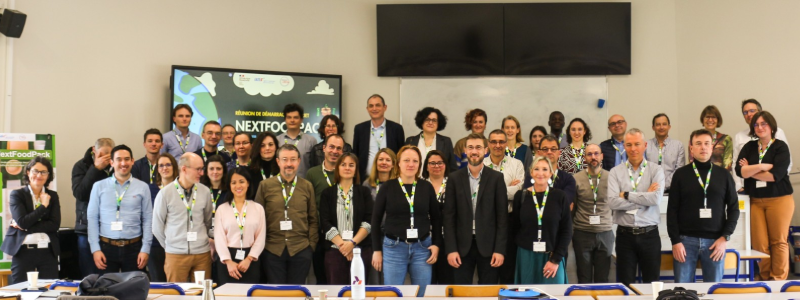
Members of the NextFoodPack consortium at the project kick-off meeting. © INRAE
A favourable regulatory context
The AGEC law, enacted in France on 10 February 2020, and more recently the European regulation on packaging and packaging waste (known as PPWR, adopted on 19 December 2024), set ambitious targets for reducing single-use plastics and improving packaging recyclability. This regulatory shift is driving a rapid transition from multilayer barrier food packaging, which is difficult to recycle, towards more sustainable materials: complex paper-based materials, recyclable mono-material films, and compostable bio-based plastics.
Assessing the performance and limitations of these innovative materials, in order to support informed technological choices while controlling associated risks, represents a major challenge for all stakeholders across the value chain (producers, packers, users and recyclers).
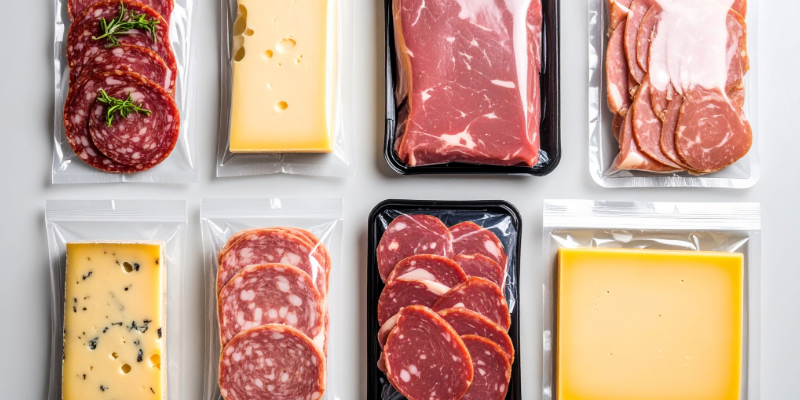
Among the sectors particularly affected is modified atmosphere packaging (MAP), which is essential for preserving perishable foods such as meat and cheese. This market, estimated at $15.9 billion and growing at an annual rate of 4.8%, requires packaging with high barrier properties to ensure both food safety and product shelf life.
The alternative solutions currently available remain limited and require in-depth assessment, particularly with regard to microbiological and toxicological risks, as well as their suitability for recycling processes.
To address these challenges, the NextFoodPack project aims to build the knowledge base required to develop a multi-criteria decision-support methodology to optimise the design and evaluation of food packaging that is high-performing, safe and sustainable.
“What distinguishes our project is its integrated approach, aimed at reconciling technological performance, food safety and environmental sustainability in the design of new food packaging” explains Thomas Karbowiak, Professor at Institut Agro Dijon and coordinator of the NextFoodPack project.
Helping manufacturers choose the most suitable packaging
At the heart of its program, the project introduces an innovation through the development of a decision-support tool. This digital platform will centralise technical, economic, environmental and regulatory data to help companies better understand, anticipate and optimise their packaging choices. It will provide an integrated overview in a constantly evolving context, where reconciling industrial performance with environmental sustainability has become a significant challenge.
Moving towards industrial deployment
Finally, the project aims to ensure the rapid transfer of scientific results into practical applications and industrial uses. The most promising solutions will be tested by industrial partners on pilot lines and technological platforms.
He concludes: “By bringing together 21 academic, technical and industrial partners, NextFoodPack creates a rare synergy to bridge research activities with the concrete needs of the sector, by developing tools and methods that can be directly used by industry stakeholders.”
|
FundingThe NextFoodPack research project has been funded by the French National Research Agency (ANR) under the France 2030 program (ANR24-EMCO-0001) with funding of €3 million and has been accredited by Vitagora. The consortium brings together 21 partners. Project lengthMarch 2025 – March 2029 (48 months) Project partnersResearch laboratories
Agri-food technical institutes and technical centres Industrial partners Other accreditations |